



Restoration in Central Ethiopia
As part of the 2025-2027 program cycle, the Hossana catchment has been engaged as a new area. The community has carried a long-standing Christian Heritage and has historically played a significant role in spreading faith across surrounding regions. However, its current reality is one of spiritual, leadership, and socioeconomic challenges.
Despite its strong Christian identity, the community is currently experiencing a decline in godly living, even among the majority who identify as believers. Leadership structures are increasingly fractured, with concerns around corruption and an ethnicity-driven selection process. In addition, rising youth migration often occurs through unsafe and illegal means, and persistent economic hardship was a key challenge identified during the community analysis. While these realities are significant, they also offer a timely opportunity for intentional engagement and meaningful transformation.
Laying The Foundation
Although still in its early phase, the intervention of godly teaching has laid important structural and relational foundations. During the first two field visits, five communities were successfully recruited into the program through open dialogue sessions, in which community members and leaders reflected openly on their internal challenges, including spiritual decline and economic struggles. These conversations revealed a shared urgency for change.
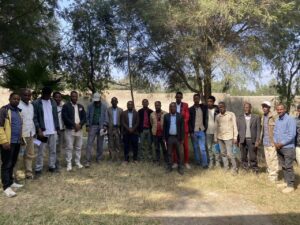
Across the five communities, 113 Shalom group leaders have been recruited, facilitating the organization of approximately 3,330 households in each group. This structure creates a platform for consistent engagement, discipleship, and community-level accountability.
One of the biggest hurdles that Possibilities Africa often faces is mindset change. However, early shifts in mindset have already been witnessed in a gradual transition from dependency to ownership. Individuals are beginning to recognize their role in driving change within their own communities. This is accompanied by a growing understanding of how to steward resources, particularly in how people view their time, skills, and local resources.
Overcoming Boundaries
By God’s grace, collaboration among church leaders is also growing. Leaders across denominations are planning to work together, setting aside long-standing differences to pursue a shared vision for community transformation. This shift is particularly significant in the Ethiopian context, where churches have traditionally operated within denominational boundaries, often limiting fellowship and joint action.
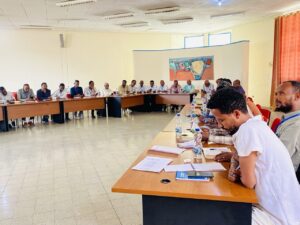
By bringing together leaders from different denominations, this pattern is breaking, creating space for unified engagement. This growing unity is contributing to renewed hope, with communities beginning to move from passive concern toward an active willingness to act.
Evangelist Abebe’s experience reflects how quickly learning and unity are happening. After participating in the initial sessions, he embraced the concept of holistic ministry and began actively sharing it with pastors and ministers across different churches. His message emphasized that ministry should extend beyond preaching to include practical livelihood and stewardship (2 Thessalonians 3:6-15).
Initially, these pastors totally relied on the church’s salary, which is often not enough to live on or do ministry effectively. They were impacted by the teaching that it’s not a sin to earn or have money. This shift in perspective led to tangible action. Several church leaders began cultivating their unused land to plant crops such as carrots and beets. What started as a teaching moment has now become a visible demonstration of stewardship that is spreading.
Standing In Biblical Truth
In the Mare Community, a different but equally significant shift is emerging; one centered on leadership responsibility and protection. Historically vulnerable to exploitation by false teachers, particularly during harvest seasons, the community has often faced both spiritual and economic harm. Following a reflective discussion on brokenness and the role of leadership, the message of responsibility deeply resonated with local ministers.
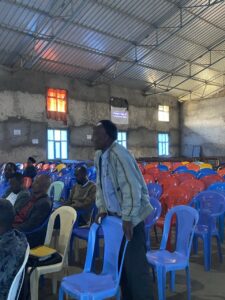
Weeks later, a false prophet entered the community, intending to exploit vulnerable households. The false teaching primarily involved so-called prophets who emphasize material gain rather than sound biblical truth. Their messages focus on miracles and prophecies, often with an underlying motive for financial gain, targeting those who may have money at hand during harvest season and exploiting these moments for personal benefit.
However, pastors who had participated in the training recognized the situation. Recalling earlier discussions on the dangers of relying on false teachings rather than biblical truth, they came together in unity to take decisive action, successfully halting the planned activities of false prophets. This moment reflects a clear shift from passive awareness to collective action, and from vulnerability to accountable leadership.
Praising the Lord
Despite being hard-pressed on every side through spiritual manipulation, deep poverty, and leadership corruption, God is doing something new among His people. Biblical truth is equipping people to stand up against false teaching and gather in the unity of Christ. In central Ethiopia, God is doing what once seemed impossible.
Leave a Reply